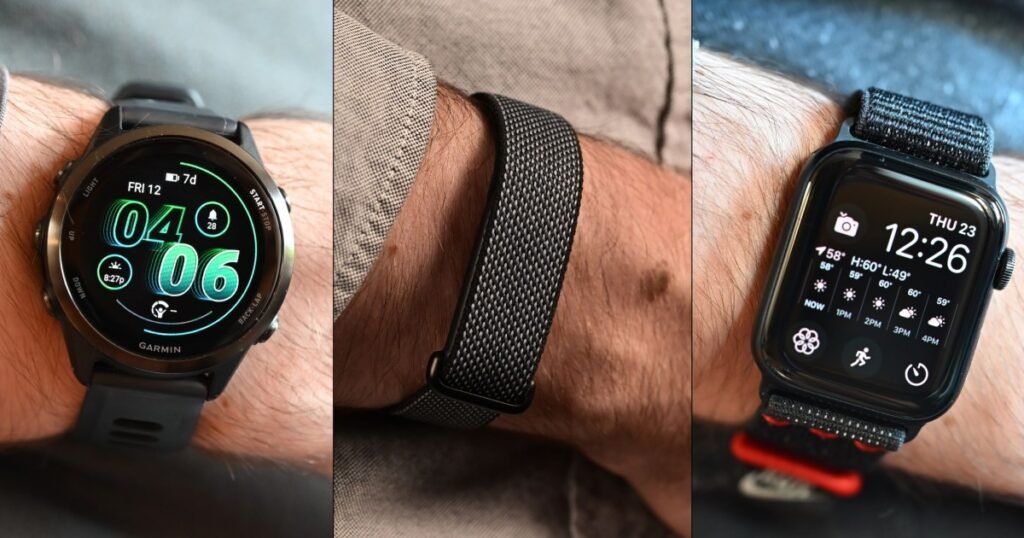
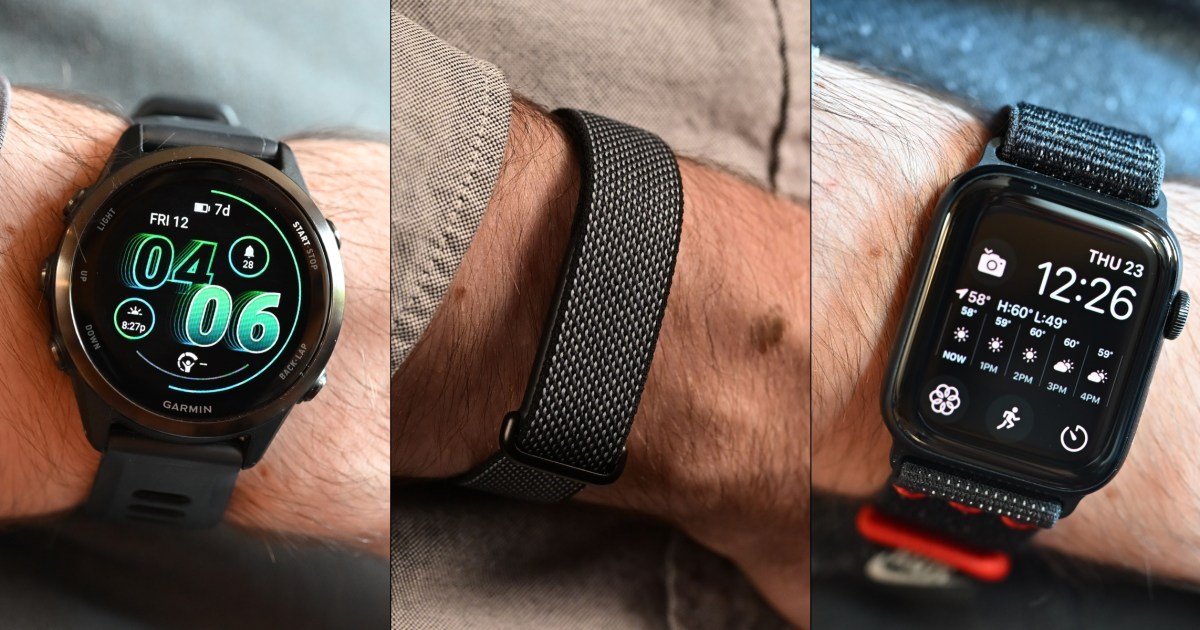
I’ve tested most of the popular fitness trackers on the market, and here are my top recommendations that match your fitness level

Independent testing determines our recommendations. When you purchase through our links, we may earn a commission.
I have spent years evaluating fitness trackers to identify the best devices for reaching your personal health goals.
Whether you are preparing for a marathon or just beginning a fitness routine, a tracker can provide essential health and exercise data to help you understand your progress. Most models feature integrated heart rate monitoring, GPS, and activity tracking, with many offering insights into sleep quality and recovery. Having tested dozens of devices over the years, I have compiled a list of the top options on the market, along with guidance on selecting the right one for your needs.
Best overall
Garmin Vivoactive 6
$229.99
$299.99
Amazon
Learn more
Best for beginners
Fitbit Charge 6
$85.45
$159.95
Amazon
Learn more
Best screenless
Google Fitbit Air
$undefined
$99.99
Amazon
Learn more
Best for runners
Garmin Forerunner 570
$549.99
$547.00
Amazon
Learn more
My top selections include products from established brands like Fitbit, Apple, and Garmin. Every device featured here was provided by the manufacturer for testing purposes.
The Garmin Vivoactive 6 offers a subtle, understated aesthetic while retaining many of the brand’s most powerful features.
The Garmin Vivoactive 6 strikes an excellent balance between fitness tracking, smartwatch functionality, battery longevity, and price, all housed in a user-friendly design. During my evaluation, I was consistently impressed by the depth and variety of its features, especially given that it is one of Garmin’s more accessible models.
This watch monitors your health, sleep, and physical activity, providing detailed metrics and analysis for each. The fitness tracking is particularly robust, featuring tools like Body Battery, workout recovery estimates, Garmin PacePro, and Garmin Coach, which includes structured plans for running and strength training.
One standout feature I enjoy is the workout animation, where the watch displays short videos of a silhouette performing specific exercises. While this is primarily used for Garmin Connect workouts like HIIT, cardio, strength, and yoga, I find it most useful for Move Alerts; the watch suggests movement options and plays an animation to follow, which made taking breaks at my desk much more engaging.
The Garmin Connect app is less intuitive than those from competitors like Fitbit and Apple, so be sure to give yourself some time to adjust to the interface before making a final judgment.
The Fitbit Charge 6 features a slim, subtle profile on the wrist.
Many staff members rely on Fitbit trackers for their lightweight construction and accessible features. The Charge 6 is a compact, beginner-friendly device that is both light on the wrist and light on the wallet. It feels intuitive to use after just a few minutes of navigating the interface, which features bright, colorful, and easy-to-read graphs.
The Charge 6 tracks and displays your heart rate, daily step count, distance, exercise sessions, calories burned, and nightly sleep. It does not monitor advanced running metrics like cadence, stride length, ground contact time, or vertical oscillation, which are available on some of my other recommendations.
New additions to the Charge 6 include Google Wallet, Google Maps navigation, and YouTube Music controls. It also features a side button that returns you to the home screen or pauses your workout. It is important to note that the device cannot be turned off; instead, it enters a power-saver mode after 10 minutes of inactivity.
The Amazfit Active 2 is one of the most attractive fitness trackers available at this price point.
The Amazfit Active 2 offers such exceptional value that I was initially skeptical, but after weeks of testing, I highly recommend it. While the software could benefit from further refinement, every other aspect is impressive for a tracker at this cost.
The build quality is a standout; it does not look or feel like a $100 device. It features a medium-sized, vibrant screen encased in stainless steel that looks sleek and sophisticated, arguably more so than the Fitbit Charge 6 or Garmin Vivoactive 6. The watch also includes a built-in speaker, allowing it to announce mileage during runs or provide turn-by-turn navigation cues.
The primary drawback is the software, as the Zepp app could use some polish. Similar to Garmin, it presents a vast amount of data and settings, which can become overwhelming as you explore deeper.
The Google Fitbit Air is among the smallest and lightest fitness trackers currently available.
If you prefer to monitor your health and fitness stats with maximum simplicity, the Google Fitbit Air is an excellent choice. It is a screenless tracker that functions as a simple band, with various colors and styles available to swap as you please.
Because it lacks a screen, you manage everything through your phone and the Google Health app, which displays stats and scores for steps, weekly cardio goals, sleep, readiness, and more. Its simple, intuitive nature makes it ideal for beginners, much like the Fitbit Charge 6.
The band automatically detects walks and workouts, though it is not always perfectly accurate; I suggest manually starting and stopping activities like outdoor runs and bike rides for better results.
There is also an optional Google Health Premium subscription for $9.99 a month, which adds an AI-powered fitness and health coach to the app. My experience with Google Health Premium was mixed; I found it required significant time to personalize to my needs, and even then, I did not find it particularly valuable, though you can always test it for a month and cancel if it does not suit you.
The Oura Ring 5 features a sleek design that is significantly smaller than previous iterations.
If you dislike wearing watches or anything on your wrists, a smart ring is the best alternative for tracking health and fitness. The Oura Ring 5 is the best option on the market; I have tested it for months, and it represents a major improvement over the already excellent Oura Ring 4.
It tracks metrics such as heart rate, body temperature, blood oxygen, sleep stages, stress levels, and exercise data, storing them all in the Oura app. While it automatically tracks walks and exercise, I find it most effective to manually start and stop outdoor workouts for the most accurate data. The app itself is among the best I have used, featuring a detailed yet approachable design that is helpful at a glance while offering deep insights in trend reports.
I appreciate that the Oura Ring 5 is 40% smaller than the Oura Ring 4, making it feel more like a standard ring than a bulky piece of technology. It is available in six colors and a variety of sizes. To access more than just the current day’s statistics, the Oura Ring requires a membership, which costs $6 a month.
The square screen of the Apple Watch SE 3 displays significantly more information at once than most competitors.
The Apple Watch is one fitness tracker that rarely leaves my wrist, and this is the brand’s most affordable model. It costs significantly less than the Apple Watch Series 11 or Apple Watch Ultra 3, yet it includes nearly all the same fitness tracking features and metrics.
The Apple Watch SE 3 is user-friendly, particularly if you are already familiar with the iPhone. The apps are similar or identical to those on other Apple devices, and the square display makes it easy to scroll through notifications and messages. It provides detailed metrics for workouts, health, and sleep. You can also use the Siri voice assistant to make requests or send voice texts, which I find much easier than typing while running.
The watch offers up to 18 hours of battery life according to the manufacturer, which is less than many competitors. However, it charges quickly, reaching nearly a full charge in just 45 minutes. It is available in two sizes with a wide variety of band options.
The Google Pixel Watch 4 is one of the most stylish recommendations on this list.
The Pixel Watch has improved annually to the point where it is now a top-tier fitness tracker and smartwatch for Android users. It performs all the functions expected of a premium smartwatch, including notifications, texting, calls, contactless payments, media controls, and offline maps.
For fitness, the watch includes integrated tracking with over 50 workout types, offering more in-depth data than other Fitbit models like the Charge 6. You can create custom workouts, including runs with specific stages and intervals. The watch can also automatically detect activities like walks, runs, and bike rides, starting the workout tracking on its own—a feature I love since I often forget to log my walks.
New to the Pixel Watch 4 are satellite SOS emergency assistance on the LTE version, multi-band GPS for improved accuracy, and enhanced battery life, among other upgrades.
I tested the 42-millimeter Garmin Forerunner 570, which fit my wrist better than the 47-millimeter version.
If you are serious about your running, the Garmin Forerunner series is an excellent choice, and the Forerunner 570 is my top recommendation. It provides more than enough tools for runners and racers and is available in two sizes to ensure a proper fit for your wrist.
My favorite training tools are Training Readiness, Training Status, and HRV (heart rate variability) status, which work together to optimize your training and recovery. Training Readiness combines multiple metrics to provide a high-level score indicating how beneficial your training will be. In practice, it helps me decide whether to take a rest day or push myself harder.
It also offers advanced running metrics such as power, cadence, stride length, and ground contact time, along with multi-band GPS for the most accurate and consistent distance and time tracking possible. It is expensive, however; if you are just beginning your running journey, my other top picks or the Forerunner 70 provide more than enough data and tools.
I tested the Whoop MG with a Whoop Life subscription, which includes a built-in ECG reader.
For athletes, Whoop’s minimalist design and highly detailed stress and recovery metrics are a great fit. Like the Google Fitbit Air, it is a small, screenless tracker that is lightweight and inconspicuous on the wrist. That is where the similarities end, however.
Whoop distinguishes itself by focusing heavily on recovery and strain. It assigns every activity a strain score between zero and 21 and emphasizes heart rate zones and strength training more than other trackers. Using Whoop encourages me to focus on the quality and intensity of my workouts rather than just distance or time. This is particularly useful for athletes or those training for a specific goal.
The required Whoop subscription is quite expensive. There are three tiers: Whoop One ($199 a year), Whoop Peak ($239 a year), and Whoop Life ($359 a year).
I have evaluated dozens of fitness trackers and smartwatches. As a runner and cyclist, I use these devices to monitor my pace, heart rate, and distance. I test each model for at least two weeks, utilizing all available features, including sleep tracking. I often wear multiple trackers simultaneously to compare data such as heart rate, average pace, mileage, elevation, and sleep scores, incorporating external heart rate monitors when necessary.
To select the best fitness trackers, I focused on the following factors:
Comfort: A tracker is only useful if you enjoy wearing it. I wore each device day and night to determine if they caused discomfort, disrupted sleep, or irritated my skin.
Data tracking: Fitness trackers collect various biometric data and present it in different ways. I chose trackers that provide a range of insights in a helpful and easy-to-understand format.
Battery life: I used each tracker for at least two weeks and noted how frequently charging was required.
GPS tracking: Many trackers feature built-in GPS. I monitored how long it took to connect and how consistent the data was compared to other devices.
Compatibility: Not every tracker works with every smartphone. I included options compatible with both iPhone and Android devices.
When shopping for a fitness tracker, price and compatibility should be your primary concerns. Beyond those, I recommend prioritizing the following:
A fitness tracker is only useful if you actually wear it. Otherwise, it will simply sit in a drawer. Ensure you buy something that feels comfortable on your wrist or finger for extended periods and fits your lifestyle and aesthetic. Try on different models in person if possible to get a better sense of size and weight than online photos provide. If you purchase online, verify the return policy before finalizing your order.
If you never wear rings, you likely won’t find the Oura Ring comfortable. Similarly, if you dislike wearing watches, you may find the Apple Watch or Google Pixel Watch bothersome. Know your preferences and how much effort you are willing to put into adjusting to a new accessory.
I believe everyone can benefit from the data fitness trackers provide if you understand your specific needs.
Consider what data matters to you. If you value outdoor exercise stats like pace and power, a Garmin watch may be the best match. If you want broad exercise and health data combined with the latest apps, a smartwatch from Apple or Google is a better fit.
Fitness is not one-size-fits-all. Take stock of your goals and requirements before making a purchase.