The 8 noise-cancelling headphones I recommend for traveling

The tranquility provided by a quality set of noise-cancelling headphones can truly define your airline travel experience. Prefer to tune out the vacation details being shared by the passenger behind you? No problem. That is exactly what ANC headphones are designed for. Need to mentally escape your middle-seat confinement on a long-haul flight? Simply queue up a movie or your favorite playlist, and with the right gear, you can retreat into your own personal bubble of quiet entertainment.
Jump to Details
$249.00
Amazon
Jump to Details
$398.00
Amazon
Jump to Details
$238.00
Amazon
Jump to Details
$359.00
Amazon
Jump to Details
$249.99
T-Mobile
These are the top-tier tech tools and products—ranging from laptops and e-readers to earbuds and robot vacuums—that represent the best in their respective categories.
What are the best noise-cancelling headphones for flying?
Anyone who has accidentally left their headphones behind on a travel day understands how essential they are, yet not all noise-cancelling models perform equally. Furthermore, the selection is constantly growing: a wide array of devices, from over-ear headphones to wireless earbuds, now feature active noise cancellation.
So, which ANC headphones are worth packing for a flight in 2026? While there are plenty of options ranging from budget-friendly to high-end, I have curated this list of the best flying companions by prioritizing a balance of comfort, portability, noise-cancelling effectiveness, battery life, and overall value. As a baseline, every pick here offers above-average audio quality and a durable build capable of surviving being tossed around in a carry-on bag.
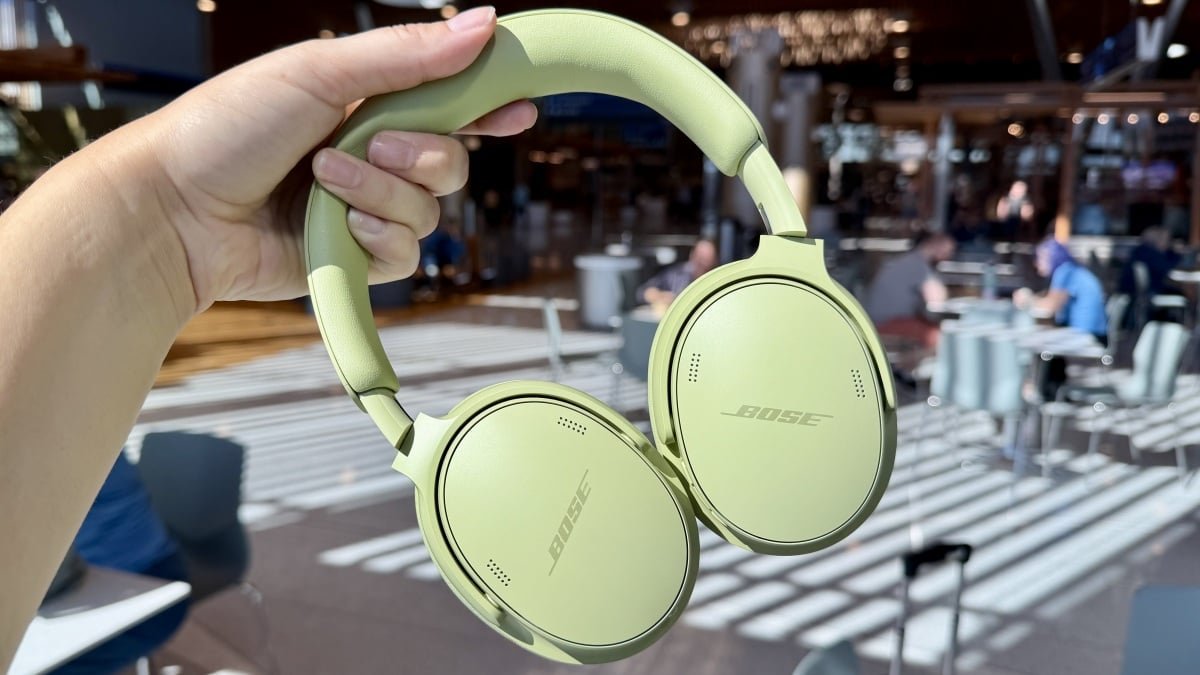
The final selections for the best headphones to use at 35,000 feet aren’t strictly the most expensive models on the market. For instance, the second-generation Bose QuietComfort headphones aren’t the most premium option featured here, but they earned a spot as one of my personal favorites during a recent flight. Below, you can find more information about them and our other top seven picks for air travel.
The most comfortable headphones money can buy
Excellent active noise cancellation
Well-balanced sound quality, with improvements in highs and lows over previous generation
Slightly more expensive than previous generation, without many differences
Bose app lacking in comparison to other apps on the market, especially with the equalizer settings
The exceptional comfort of these headphones makes them our top choice for long-haul travel, complemented by high-performance ANC, great sound, 30-hour battery life, and newly integrated passive playback.
The first-gen QC Ultra headphones have long been our primary recommendation for flying, so it is no surprise that Bose’s latest iteration is taking the top spot.
While we wouldn’t necessarily label these a mandatory upgrade if you already own the first-gen QC Ultras, they do feature across-the-board improvements that make them a superior choice for travelers.
For starters, they deliver the premium noise cancellation and audio quality expected from Bose. While the Sony XM6 headphones slightly edge them out in both categories, we find the Bose pair more comfortable, which is a major plus for extended flights. The 30-hour battery life—an upgrade from the 24 hours offered by the previous generation—provides extra peace of mind for long travel days. Additionally, the folding ear cup design makes them one of the more compact over-ear options available, which is highly convenient when you are restricted to a carry-on.
Other enhancements include the addition of passive playback and USB-C lossless audio. While the latter requires the headphones to be powered on, the former functions whether the device is on or off, a feature missing from the first-gen model. Priced at $449, matching other premium competitors, these stand out as the best all-around travel option.
Fantastic sound quality and ANC
Foldable earcups make them easier to pack in a carry-on
Can be used passively (without powering the headphones on)
Not the absolute best ANC in the game
No improvement on battery life from previous generation
Read our full review of the Sony WH-1000XM6 headphones.
For frequent travelers who skipped the XM5s, the XM6s offer a vital travel-friendly upgrade with foldable ear cups, while maintaining the updated design, improved audio, and ANC of their predecessor. If you already own the XM5s, these may not be worth the upgrade just yet.
Sony’s flagship headphones have been a staple since the days of the WH-1000XM4, thanks to their superb sound profile and top-tier active noise cancellation.
The WH-1000XM5s lost some favor regarding portability when Sony removed the folding ear cup design, resulting in a larger case that took up more room in a carry-on. With the XM6s, Sony has returned to the folding design, leading to a thinner, more compact carrying case. The snap-lock closure on the case also allows for incredibly quick storage.
Regarding performance, Sony didn’t reinvent the wheel, but they made incremental improvements that result in a better overall product, particularly for those who don’t already own over-ear headphones or are upgrading from older models. The sound signature is warm and full without any equalizer adjustments—noticeably more so than on the XM5s. With the equalizer, they are among the best-sounding headphones available, offering clarity and balance on tracks ranging from Adele’s “Hello” to the Eagles’ “Hotel California.”
The 30-hour battery life remains consistent with the previous generation; while an increase would have been welcome, it is still sufficient. The ANC effectively dampens noise, although Bose performs slightly better in this area. The design is comfortable, featuring ample padding on the headband and earcups. The subtle change to a circular power button also makes the on-ear controls easier to operate than on the XM5s.
Offer premium comfort and ANC for less than over-ear headphones
Significantly reduced noise on airplanes
Comfortable to wear for long periods of time, with minimal adjustments needed
Impressive sound quality with spatial audio features
Wireless charging compatibility
Battery life isn’t great, especially compared to competitors
Read our full review of the second-generation Bose QuietComfort Ultra earbuds.
Top-tier performance isn’t limited to over-ear headphones, and the second-generation Bose QuietComfort Ultra earbuds prove it. If you prefer a compact, in-ear design, these are the best travel earbuds you can buy.
The second-generation Bose QuietComfort Ultra earbuds provide some of the most effective noise cancellation found in any earbuds, making them a fantastic choice for air travel.
This is due to the eight microphones Bose includes in these earbuds, combined with a design that creates a tight seal for passive noise isolation. With three sizes of ear tips and three sizes of stabilizers, it is simple to find a fit that boosts noise cancellation without causing ear fatigue.
If first-gen users notice many similarities, it is because these buds are quite similar to their predecessors. Beyond a nearly identical design, both generations offer six hours of battery life per charge and 24 hours total with the case. This is perhaps their biggest drawback for travel, especially since seven to eight hours of battery life has become standard for ANC earbuds.
The primary upgrades in the second generation include wireless charging and AI voice enhancement, which adds noticeable clarity to phone calls, though this may not be the most useful feature for flights. The noise cancellation and sound quality also felt slightly improved over the first-gen buds, though the difference was only apparent during side-by-side testing.
At this stage, the main reason we recommend the second-gen earbuds over the first is availability; as the first-gen buds are phased out, they will become harder to find. With that in mind, if you already own the first-gen earbuds, we suggest keeping them.
Battery life: Six hours (Up to 24 with charging case)
Frequently on sale for under $60
Impressive sound quality for the price point
Decent ANC that you can adjust with companion app
Battery life that beats most premium options
Some creaking with head movement
Comfort for long periods of wear can be more contingent on the user
Whether you don’t travel enough to justify a $450 pair of headphones or simply aren’t interested in that price range, a reliable budget pair of noise-cancelling headphones can be a game-changer, and the JLab JBuds Lux ANC are exactly that.
The best budget headphones should offer unbeatable value, and these JLab headphones deliver exactly that.
Despite an $80 retail price (and dropping as low as $30 during sales), they feature a sound profile that easily competes with headphones twice their price, especially once you adjust the equalizer settings. Even better is their battery life; while our premium picks average around 30 hours, these offer 40 hours with ANC enabled, making it unlikely you will need to recharge mid-flight.
Haley Henschel noted that her favorite aspect of these headphones was their fit: “I have a really hard time finding headphones that don’t squeeze my head, and I can wear these comfortably for hours at a time.” Conversely, Bethany Allard found them to squeeze her head, so their comfort level may vary based on your personal fit preferences. Their design earns points for portability, however, thanks to the foldable ear cups.
They may not be the perfect pair of headphones, but for the price, they are well worth purchasing before a trip, especially as an affordable option.
Battery life: 40 hours with ANC
Significantly better battery life than other headphones on this list
Comes with airplane jack adapter for in-flight entertainment
ANC is not quite as good as Sony and Bose options
Overly sensitive touch controls
The Sennheiser Momentum 4 headphones feature incredibly balanced sound quality, but what truly made them stand out was their battery life, which lasts for 60 hours with ANC enabled. They are a fantastic choice for anyone on a long trip who wants one less device to worry about charging.
Many over-ear headphones, including numerous premium models, have battery lives that max out around 30 hours. While it is possible to find longer battery life—the Soundcore Life Q20 and the Dyson OnTrac headphones offer 40 and 55 hours, respectively—each of those comes with a compromise.
The Life Q20 headphones are budget-friendly, meaning you sacrifice top-tier ANC and premium sound, while the Dyson OnTrac headphones are bulky and not well-suited for travel. The Momentum 4 headphones, however, sound crystal clear right out of the box. In our testing, they made the bass on Magdalena Bay’s “Killshot” stand out in a way we had never heard before, without sacrificing the complexity of the rest of the track. Plus, at $379.95, they are cheaper than the flagship Sony and Bose models, and can often be found on sale for around $280.
They also feel more thoughtfully designed for travel, with ear cups that have a slightly flatter profile than the Sony XM5s, and an included airplane audio adapter in the case (a feature we wish all premium headphones offered). The ANC doesn’t quite match Sony’s—it is just slightly less effective—but on a plane, we doubt you will notice a significant difference, especially while listening to audio.
We have only found one other drawback: the overly sensitive touch controls on the right ear cup, which we often accidentally triggered when removing the headphones to place them around our neck. We ended up accidentally disabling the controls entirely, which is not ideal.
Adjustable ANC that works great for drowning out plane engine and other passengers
Great tactile controls on earcups
Still expensive, but many of the benefits of the Ultra 2 headphones at a lower price point
Louder sounds (like a plane taking off) can cause noise cancellation to briefly cut out
Limited to a three-band equalizer
Not quite ready to spend over $400 for our top pick? Bose’s latest—the second-generation QuietComfort headphones—bridge the gap between the flagship model and the mid-range QuietComforts more effectively than ever, offering long wear times, great ANC, and solid sound quality with spatial audio, making them a great choice for long travel days.
As excellent as our top-choice Bose headphones are, they aren’t exactly budget-friendly at $449. At $359, the new Bose QuietComfort (2nd gen) headphones aren’t cheap, but they come very close to the Ultra’s performance for nearly $100 less.
New to the QuietComfort line is immersive audio, Bose’s spatial audio feature that creates the sensation of a live setting (this was previously limited to the QC Ultra models). As nice as it is to see an audio feature added, where these headphones really shine is in their comfort and noise cancellation. Bose improved both over the previous generation, with a more plush headband and an oval-shaped earcup that reduces sound leakage. The result? On flights up and down the West Coast, I heard minimal engine hum and was able to completely tune out conversations from fellow passengers. I also never felt the need to remove the headphones due to wear fatigue.
The only real flaws I noticed were some popping in the noise cancellation during plane takeoff (due to the spike in noise) and a limited equalizer, but neither bothered me much. The former happens rarely and for brief periods, while the latter is mitigated by relatively robust sound out of the box.
So, where do they fall short compared to the more expensive QC Ultra 2 headphones? They are slightly less comfortable, have not-quite-as-great ANC, and the sound quality isn’t as rich. In other words, if you want the best of the best, go Ultra, but if you are happy with pretty dang close, these QuietComforts will get the job done.
Pairs well with Apple products
Some of the best value ANC earbuds out there
Will barely take up any space in your bag
Fitness and live translation features included
Read our full review of the Apple AirPods Pro 3.
Apple users will not only appreciate the seamless pairing of the AirPods Pro 3, but also how well features like the built-in heart rate monitor and live translation work alongside standard features like excellent ANC and sound quality.
The AirPods Pro are a fixture on our lists of best headphones thanks to their exceptional integration into the Apple ecosystem, top-notch ANC, and excellent sound quality.
Apple upped the ante with the AirPods Pro 3. On one hand, they are simply an impressive pair of noise-cancelling earbuds. In his review, Adam Doud writes, “ANC used to be great at removing constant noises, but fell short with sudden noises like a person talking or a car horn. That’s still the case with lower-end ANC earbuds, but Apple does a remarkable job at eliminating sudden noises, too.”
Doud also calls the sound profile on these buds flat, but it’s not a knock against them for anyone who likes to plug and play their audio equipment. While you can adjust the sound somewhat with presets, there is no custom equalizer.
What they do have is a built-in heart rate monitor and live translation capability. Both features are exceptionally useful for travelers who like to pack light (and maybe don’t want to risk keeping track of too many devices while they’re on the go), providing one convenient package of earbuds and a basic fitness tracker. The live translation, naturally, is also great for traveling abroad. As the cherry on top, Apple increased the Pros’ battery life from six hours per charge on the previous gen to eight hours per charge, putting them on par with some of the top-performing ANC earbuds.
Despite all the extras (and the Apple name), the Pros will cost you less than earbuds like the Bose QC Ultras and Panasonic Technics EAH-AZ1000, both of which will run buyers $299.
Battery life: 8 hours (up to 30 hours with charging case)
Noise cancellation that compares to earbuds twice their price
Different levels of noise cancellation available
Extensive app options, including customizable touch controls and custom EQ
Multipoint pairing with two devices works without a hitch
Touch controls could be more consistent
The EarFun Air Pro 4 are the best earbuds you can get under $100, but they compare easily to earbuds double their price. If you want a budget pick that punches above its weight class, you will find it in these earbuds.
The Air Pro 4 earbuds look like most other budget earbuds out there, but their appearance is where the similarities stop. After powering them on, we were immediately impressed by how well their active noise cancellation worked, and that feeling didn’t fade as we put them to the test against forces like people talking loudly around us. Once we connected these earbuds to their companion app, we were even more impressed by the five different levels of noise cancellation.
As we mentioned in the intro of this guide, comfort is a key factor in choosing the best headphones for travel, and while these don’t reinvent the wheel, we found them to stay put much better than other earbuds (including the first-gen AirPods Pro). EarFun provides five different silicone ear tips with these buds to help you find the right fit.
So, where do they show their lower price point? Not in the sound quality, which we found to be well-balanced and easily adjustable with the equalizer presets and custom EQ feature in the app. Where you will likely notice it most is in the finicky on-ear touch controls, which, though adjustable, wouldn’t always register properly. A single press to pause music, for instance, might actually be treated as a long press to turn on noise cancellation. You can toggle the touch controls off, but you do lose a small level of convenience.
Though we’re not a fan of the inconsistency of the touch controls, we will say that they were never overly sensitive—while wearing them with a hood, these buds never registered the jacket’s fabric or hair as a button press (the same can’t be said for other earbuds we’ve tested).
Finally, in our few weeks of testing these earbuds by wearing them regularly, we’ve only had their battery completely run out once, and have only put them on the charger twice. In other words, with the Air Pro 4s, you’re not likely to find yourself halfway through a five-hour flight enduring some forced mindfulness while your earbuds juice back up.
Battery life: 7.5 hours with ANC, 27.5 hours with case
How much should I spend on noise-cancelling headphones?
If you want to find the best noise-cancelling headphones for flying, you should be prepared to pay $200 to $450 for most options. Premium headphones offer improved active noise cancellation, customizable settings, and transparency modes that allow you to hear those all-important gate announcements.
Many cheap headphones claim to offer “noise-cancelling” features, but a random pair of $50 over-ear headphones with passive noise cancellation will let a lot of sound through. They will also struggle to connect and switch between devices easily, or simply feel uncomfortable.
At the end of the day, going for that good all-around pair is worth it, because on a flight, ANC on its own won’t save the day—otherwise, we would just direct you to our guide to the best noise-cancelling headphones. For long flights, comfort is also key. It won’t matter if your headphones block sound if you only want to wear them for two out of five hours of your flight. And because this is a flying-focused roundup, we did give extra points to headphones with thoughtful design that makes storage easy.
If that $200-plus price range feels totally out of the question, we’ve included a couple of budget earbuds and headphones in the under-$100 category, but they come with tradeoffs. If you’re okay with a mid-range pick, consider buying wireless earbuds with ANC instead of over-ear headphones.
If the cost of a pair of headphones is off-putting, you can always wait for a sale to start. We see headphones from Bose, Sony, and Apple get marked down year-round—if you don’t want to keep your eyes peeled yourself, our deals coverage is a great place to find any noteworthy headphone deals.
When you’re on a plane, over-ear headphones are typically going to offer the best experience for noise cancellation. Over-ears create a better seal around your ear that helps you block out even more sound. They also are more likely to have a 3.5mm cable and audio jack so you can use them as wired headphones, which some folks prefer for in-flight entertainment. Active noise-cancelling wired earbuds aren’t really a thing, so if you prefer a wired connection, you’ll want to opt for wired over-ear headphones.
However, one of their major downsides is that they do take up more suitcase or carry-on real estate than any pair of earbuds will. Earbuds are also generally more comfortable to wear for longer plane rides, but they are more likely to run out of battery (if you’re looking for comfortable noise-cancelling earbuds, we recommend the Bose QuietComfort Ultra buds).
Ultimately, when deciding between earbuds or over-ear headphones for flying, it comes down to your preferences and how you travel. In most cases, we prefer over-ear headphones, reflected by our recommendations in this guide.
Noise-cancelling headphones work by reducing unwanted ambient sounds using active noise control. A microphone captures the ambient sounds around you in real-time; meanwhile, an amplifier generates sound waves out of phase with those unwanted sounds. That way, the music you’re listening to shines through the chaos. With ANC engaged, crying babies, people talking, or general airplane noise will fade away like magic.
Generally, noise cancellation works best with constant droning sounds like a plane engine rather than sharp sounds like voices, but the best noise-cancelling headphones still do a good job of blocking these out to some degree.
Some headphones offer passive noise cancellation (also known as noise isolation) rather than active noise cancellation (ANC). Instead of using microphones to filter out undesired sounds, these headphones rely on soundproofing by physically blocking outside sounds. It’s less effective than using a pair of headphones that use active noise cancellation, but it does mean there’s less of a strain on battery life.
Some people also prefer passive noise cancellation, as active noise cancellation has been known to make people feel pressure in their ears. However, when searching for the best headphones for travel, this is less of an issue and something that frequent flyers will learn to live with.
We’ll level with you: that ever-present engine hum of the plane isn’t likely to completely disappear, even with the best active noise cancelling. However, ANC can significantly reduce that hum (and the sounds of your fellow passengers), making them a genuinely good accessory to finding more peace on your flight.
Just make sure your headphones are charged beforehand: because ANC typically works by using microphones and amplifiers to cancel out unwanted noise, you won’t be able to experience active noise cancelling while using Bluetooth headphones passively (aka with a cable) or with wired earbuds.
All of these headphones were hands-on tested by our editors and writers, including past and current tech reporters, senior tech editors, as well as shopping reporters and editors. To learn more about how we test headphones and earbuds in general, you can check out our comprehensive guide. All of these headphones in this piece were chosen with the following criteria in mind:
As we mentioned above, active noise cancellation becomes much less enjoyable if the headphones delivering it squeeze your head for the entirety of your flight. Any headphones that weren’t favored for long-term wear didn’t make our list.
If your headphones’ battery is going to die 30 minutes into your flight, they’re not going to cut it for even the shortest of trips. Our picks were typically in a higher price range that have better battery life and quick charge options for the times when you forget to juice up your headphones the night before you leave.
Active noise cancellation quality
There are lower cost options for ANC, but not all active noise cancellation is delivered the same. That’s why we focused on picks that either offered multiple levels of ANC, or delivered a strong level of ANC on its own, that didn’t require music to make a noticeable difference.
Taking your headphones with you through TSA lines just opens them up to more wear and tear, so we went for higher-cost picks that are likely to survive the journey. Plus, we made sure to choose headphones that will last you for years, so the upfront investment is worth it. Headphones and earbuds with good (and portable) cases earned extra recognition in this category.