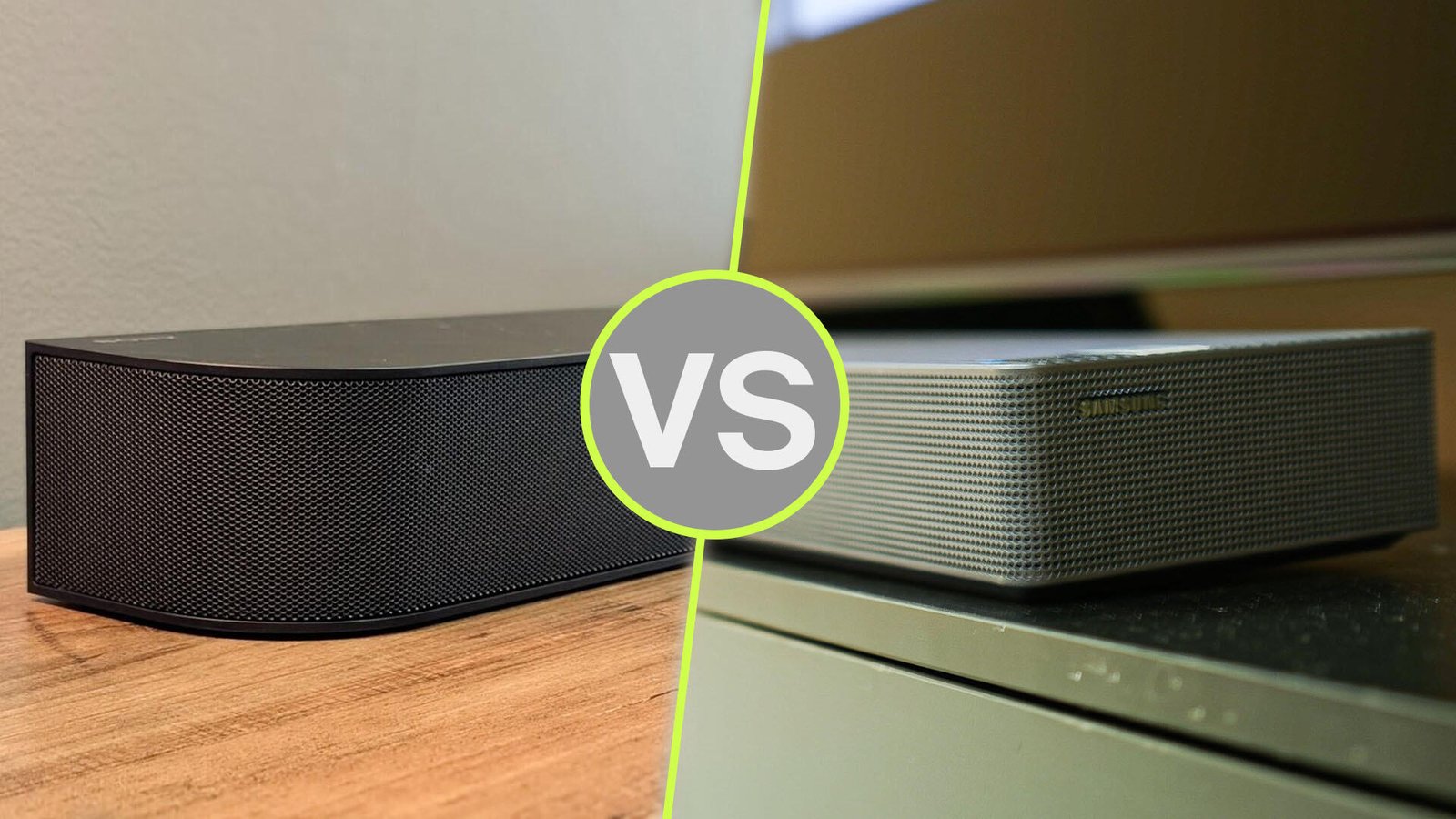
When building a home theater, you will likely weigh the merits of Samsung or Sony. Both brands provide immersive home theater solutions designed to elevate your viewing experience. Before selecting a home theater setup, consider which brand’s television you prefer. A TV from either manufacturer acts as the central anchor for your system, and your home theater components will revolve around that choice.
Each company’s audio products are designed to integrate seamlessly with their own televisions, and certain features may be restricted if you mix and match different manufacturers.
Generally, Sony offers modular options that allow you to build your system over time, with a focus on a cinematic experience and tight integration with the PlayStation. Conversely, Samsung is ideal for those who prefer a “one-and-done” approach, favoring a complete system that can be purchased at once and used for years. Samsung is also the better choice for households with multiple Samsung smart appliances, as the TV can function as a hub to monitor and control devices connected via SmartThings.
Which home theater solution best fits your needs? Let’s compare.
You should build a Sony home theater if…
Sony is the home of PlayStation, and its home theater products are optimized for its latest-generation gaming console. Compatible Sony TVs and soundbars work in tandem to automatically minimize picture and audio latency while enhancing visual quality during PlayStation 5 gameplay.
Compatible Sony TVs also support variable refresh rates, adjusting the frame rate during PlayStation 5 gaming to reduce lag. Sony’s upper-midrange and premium soundbars feature Sony 360 Spatial Sound Mapping, which creates “phantom” speakers throughout your room to simulate a full surround-sound environment.
Both Sony and Samsung premium soundbars offer 4K/120Hz pass-through specifically optimized for the PlayStation.
2. You want to build over time
Sony’s ecosystem allows you to assemble a system gradually based on your specific space and budget. Sony offers six soundbars compatible with its modular product line, ranging in price from $600 to $1,500. Four pairs of rear speakers and five subwoofers are compatible with these six soundbars, providing significant flexibility.
On the other hand, Samsung’s home theater systems are typically sold in a single box, meaning the flagship soundbar, rear speakers, and subwoofer are bundled into one purchase, which offers excellent value. However, you can also purchase two Samsung Music Studio-series speakers and group them to serve as rear channels for your Samsung home theater. These Music Studio speakers are similar to Sonos’s Era-series; they are standalone Wi-Fi smart speakers that function as surrounds once configured.
If you prefer to avoid smart speakers, Samsung also offers a dedicated pair of rear theater speakers. Conversely, Sony does not offer smart speakers for home placement; instead, it provides several pairs of dedicated home-theater speakers. While Samsung’s “all-in-one” approach may be more cost- and time-effective than Sony’s, you have fewer options to customize the system to your exact preferences.
You should build a Samsung home theater if…
1. You want a connected smart home
A compatible Samsung TV can act as a SmartThings hub, allowing you to view and manage devices across your SmartThings network. If you own Samsung smart appliances or Matter-enabled home automation products, your Samsung TV can keep you updated on the status of your home.
Samsung’s home automation platform, SmartThings, serves as the central hub for all your connected hardware. Through this interface, you can access compatible doorbell cameras, check the status of a Samsung washing machine, track a pet’s Galaxy Tag, or look inside a compatible refrigerator.
If you want your living room to be a connected hub for your home’s devices rather than an isolated area strictly for entertainment, consider Samsung.
2. You’re a one-and-done person
Samsung’s premium and upper-midrange soundbars are sold in bundles: premium models include the soundbar, two rear speakers, and a subwoofer, while upper-midrange models include the soundbar and a subwoofer. If you aren’t interested in curating a system over time, you will appreciate Samsung’s excellent home-theater-in-a-box options. You can buy a system once, acquire everything you need, and stick with it for several years.
If you own a Samsung TV, the company’s soundbars will perform better due to Q-Symphony. This feature enables a compatible Samsung TV to deliver audio through both its internal speakers and the soundbar simultaneously. Otherwise, as long as your TV features HDMI eARC, you can access all the other features offered by Samsung’s soundbars.
Though both Sony and Samsung deliver high-quality home theater products, each brand caters to different consumer profiles. I do not maintain an expansive smart home network, so I prefer Sony’s products over Samsung’s. Sony often leverages its deep involvement in the audio recording, motion picture, and gaming industries to incorporate more advanced technologies into its home theater lineup. As a result, Sony’s products tend to sound more balanced than Samsung’s.
After testing several home theater products from both manufacturers, I found that Samsung’s offerings are incredibly room-filling, and its soundbars alone deliver stronger, punchier bass. Heavier bass can be ideal for watching intense, action-packed movies or for streaming live sports. If that sounds like your preference, you will likely enjoy the Samsung sound signature.