

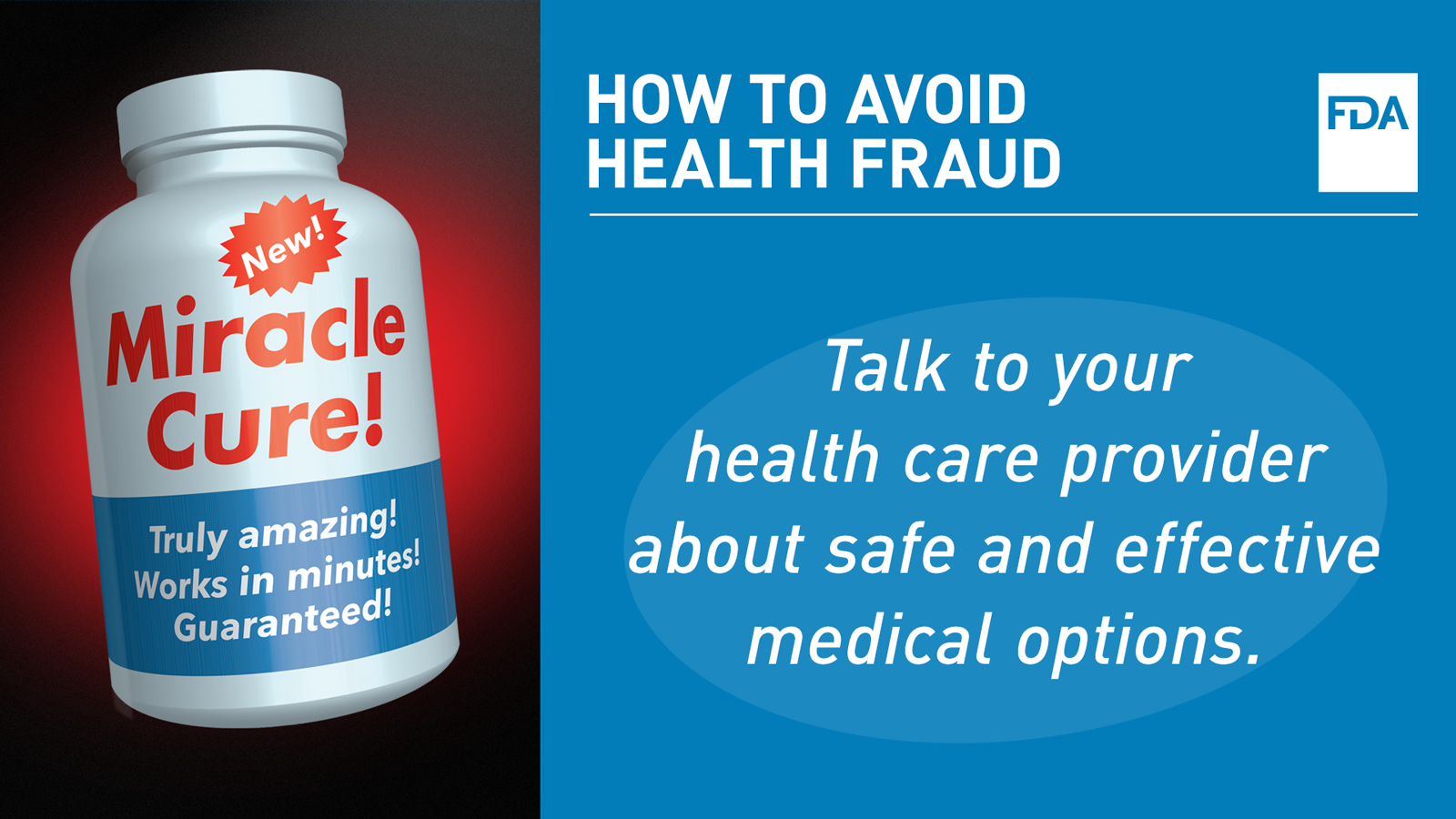
Bogus product! Danger! Health fraud alert!
You’ll never see these warnings on health products, but that’s what you ought to be thinking when you see claims like “miracle cure,” “guaranteed results,” or “vaccine alternative.”
Health fraud scams have existed for centuries, exploiting the wish for a quick or miraculous remedy. The old‑time snake‑oil peddlers have evolved into sophisticated, high‑tech marketers who prey on people seeking easy fixes for serious conditions such as Alzheimer’s, arthritis, cancer, diabetes, memory loss, sexual performance issues, weight problems, COVID‑19, influenza and other infectious diseases.
The Food and Drug Administration (FDA) defines a health product as fraudulent when it is deceptively advertised as effective against a disease or condition without scientific proof of safety and efficacy.
Scammers use clever marketing, often targeting specific groups through magazines, TV and direct mail. Health fraud proliferates on social‑media platforms and closed messaging apps like Signal, Viber, WhatsApp and Facebook Messenger.
These scams also appear in places such as convenience stores, gas stations, flea markets and other non‑traditional outlets, aiming at individuals with limited English skills and restricted access to health care information. Additional hazards include dangerous or unproven items shipped directly from overseas and other safety concerns.
Consumers can improve their ability to spot and avoid health fraud by staying smart, alert and cautious when buying health‑care products.
Here are six tip‑offs to help you identify rip‑offs.
One product does it all. Be suspicious of products that claim to cure a wide range of diseases. The agency continues to send warning letters and take enforcement action as appropriate against companies marketing fake cure‑all products. These miracle cures don’t exist – they’re bogus – and the only thing these companies are selling is false hope.
Personal “success” testimonials. Success stories, such as, “It cured my diabetes” or “It immediately stopped my COVID‑19 infection,” are easy to make up and are not a substitute for scientific evidence. Reviews found on popular online marketplaces and social media can be fake.
Quick fixes. Few diseases or conditions can be treated quickly, even with legitimate products. Beware of language such as, “Lose 30 pounds in 30 days,” “protects from viral infections,” or “eliminates skin cancer in days.”
“All natural” cure or treatment. Don’t be fooled by descriptions like “all‑natural cure.” Such phrases are often used in health fraud as an attention‑grabber to suggest that a product is safer than conventional treatments. These terms don’t necessarily equate to safety. Some plants found in nature (such as poisonous mushrooms) can be harmful or even kill when consumed. Moreover, the FDA has found numerous products promoted as “all‑natural” cures or treatments that contain hidden and dangerously high doses of prescription drug ingredients or other active pharmaceutical ingredients.
“Miracle cure.” Alarms should go off when you see this claim or others like it such as, “new discovery,” “guaranteed results,” or “secret ingredient.” If a real cure for a serious disease were FDA‑approved, it would be widely reported through the media and prescribed by licensed health professionals—not plastered on advertisements in social media and messaging apps, or buried in websites, print ads, and TV infomercials.
Conspiracy theories. Claims like “This is the cure our government or Big Pharma doesn’t want you to know about” are used to distract consumers from the obvious, common‑sense questions about the so‑called miracle cure.
Fraudulent products not only can’t deliver on their baseless promises—they could cause serious injury, or even death. Besides wasting money and delaying potentially life‑saving diagnosis and scientifically tested and proven treatments, fraudulent products sometimes contain hidden drug ingredients that can be harmful when unknowingly taken by consumers.
For example, in recent years, FDA laboratories have found hundreds of weight‑loss products, illegally marketed as dietary supplements, that contained sibutramine, a Schedule IV controlled substance and the active ingredient in a prescription weight‑loss drug. This prescription drug was later withdrawn from the U.S. market after studies showed that it was associated with an increased risk of heart attack and stroke. Furthermore, fraudulent products may be manufactured by unregistered facilities under unknown, unclean, or dangerous conditions.
Health fraud scams can involve a variety of FDA‑regulated products. For instance, the FDA discovered an expensive laser device being sold with fraudulent cure‑all claims to treat cancer, HIV/AIDS and diabetes. Three individuals were sentenced to prison for their involvement in the $16.6 million fraudulent scheme to distribute misbranded devices.
Even with these tips, fraudulent health products are not always easy to spot. If consumers are tempted to buy an unproven product or one with questionable claims, they should check with their doctor or other health‑care professional first.
Submitting Adverse Event Reports to the FDA
Consumers experiencing adverse reactions to a product should submit voluntary adverse event reports to the FDA using:
Reporting Unlawful Sales of Medical Products on the Internet (English/Spanish)
Consumer Reporting Form FDA 3500B. Follow the instructions on the form to either fax or mail it in for submission. For help filling out the form, see MedWatchLearn.
Call FDA at 1‑800‑FDA‑1088 to report by telephone.