Sustainable cleaning has surged in popularity as an increasing number of products hit the market claiming to be eco-friendly.
But what does sustainable cleaning actually mean and, if you’re seeking to clean your home in a more sustainable way, how do you start?
To answer these questions, we spoke to Chris James from the British Cleaning Council. He shares what sustainability really means in the context of cleaning, how to shop for genuinely eco-friendly products and practical tips to help you reduce your environmental impact at home.
What is sustainable cleaning?
‘Sustainable cleaning basically means cleaning in a way that won’t leave a footprint for the next generation,’ explained Chris James, a biologist who specialises in cleaning science, environmental science and sustainability.
‘You’re looking for cleaning products that have been properly designed and can be recycled at the end of their lives.’
However, some companies attempt to convince consumers they are doing more for the environment than is actually the case. Often called ‘greenwashing’, this practice can mislead shoppers into believing they are making sustainable choices when they are not.
Here are six tips to make your cleaning more sustainable:
1. Look for biodegradable cleaning products
Cleaning agents often end up in our sewer systems, so it is important to consider the toxicity of the chemicals found in your chosen brands.
‘There are lots of confusing terms: green cleaning, environmentally friendly cleaning, carbon-neutral cleaning, some of which aren’t terribly helpful,’ said Chris.
‘The truth is, there are very few cleaning agents that are completely environmentally friendly so, really, the term you’re looking for is “biodegradable” – preferably within 12 months. This means the contents will break down and won’t pollute the environment.’
Our reviews of the best kitchen, bathroom and all-purpose cleaning sprays highlight which ones are biodegradable or likely to persist and linger in waterways.
You’ll also see the most eco-friendly products highlighted in our Eco Buy recommendations, which assess the specific chemicals used and whether the packaging is recyclable.
2. Stick to just a few cleaning products
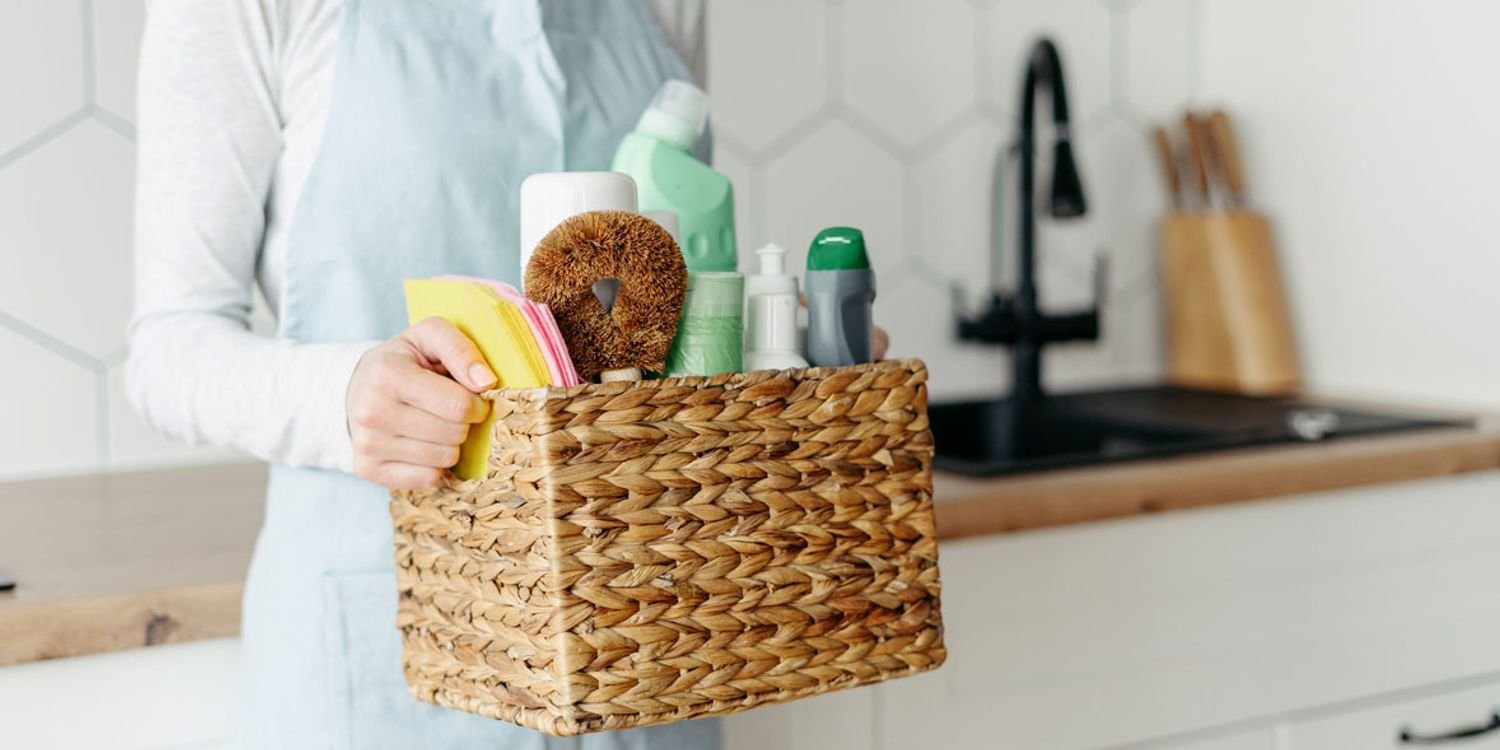
Many professional cleaners utilize only a handful of supplies: a neutral detergent—such as dish soap—a kitchen degreaser, a mild disinfectant, and a descaler for limescale.
‘Most household cupboards have about 23 different detergents but you don’t need lots of products to clean your home – you can do it with just a few,’ said Chris.
Using fewer products also reduces the risk of chemicals mixing, which can be hazardous to both you and the environment. Furthermore, you are less likely to have leftover cleaning agents go to waste.
‘Many households are very imprecise when it comes to the ratio of cleaning agent to water,’ said Chris.
‘Often people use too little or too much. Too little means you won’t get the job done; too much is wasteful.’
Familiarize yourself with your cleaning agents before use. Because recommended quantities vary by product, be sure to read the packaging instructions carefully.
It’s also worth remembering that some brands, such as Smol, offer concentrated cleaning products in the form of a small tablet that’s dissolved in water to produce the cleaning liquid. The sprays are available in three varieties – multipurpose, bathroom and glass.
4. Invest in reliable appliances
There is little benefit in purchasing an appliance if it breaks and requires replacement after only a few months. This is detrimental to both your finances and the planet.
That’s where our reviews come in. By joining, members gain access to various data, including independent lab tests of cleaning appliances like vacuum cleaners and steam cleaners, as well as extensive reliability surveys to identify which brands are built to last.
In some categories, we designate a Which? Eco Buy to highlight products that offer the lowest environmental impact among those tested, provided they also perform well in our standard evaluations.
5. Dispose of your appliances responsibly
When your cleaning equipment reaches the end of its life, it is vital to ensure it does not harm the environment. Often, electrical components like wires and batteries can be taken to a recycling center.
‘Some companies are looking into whether it will be possible when, for example, your vacuum has stopped working, they can just replace the parts and send it back to you so it can be reused,’ said Chris.
6. Look for good-quality microfibre cloths
‘Microfibre cloths are excellent – they have a large surface area and they remove both visible and invisible soiling,’ said Chris.
‘But you have to be careful with how you wash them. They can tear clothes if you launder them with other things, so it’s best to wash them separately.
‘Don’t use fabric softener because it can cause the cloths to be less effective. And the less expensive ones do shed a lot of microfibres in the water, which can be harmful for the environment. Make sure you invest in good quality ones.’




















One thought on “Eco-friendly cleaning: 6 tips for sustainable cleaning”