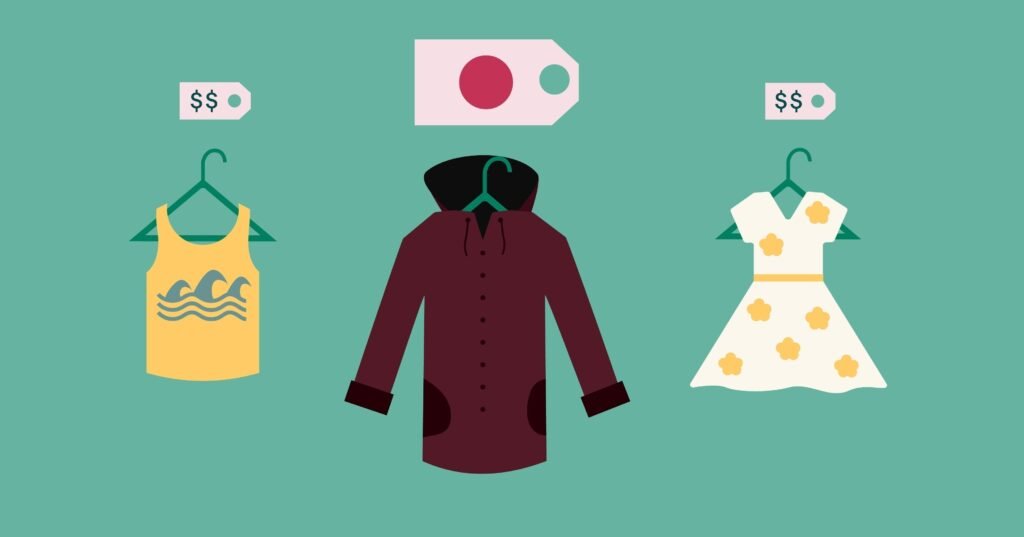


Learn how <a href="https://shoppixy.com/which-one-is-best-for-your-smart-home/” title=”Which One Is Best for Your Smart Home?”>smart visual merchandising, product displays, and store layouts can attract customers, boost sales, and strengthen your brand.
Great products can draw customers to your store, but turning browsers into buyers requires more than quality merchandise.
Visual merchandising is an art and strategy that shapes how customers move through your retail spaces. It’s a collection of design and visual cues that use logic and layout to guide customers toward sales. You can think of visual merchandising as a silent salesperson for your in-store and online environments, helping set and reinforce your brand identity.
Here, learn practical strategies for creating visually appealing spaces that highlight your products, build memorable customer experiences, and drive sales with style.
What is visual merchandising?
Visual merchandising is the practice of planning and designing product displays that attract customers and increase sales. Through layout, lighting, décor, branding, and other visual and experiential elements, it creates an environment that inspires customers to explore, engage, and buy.
Understanding visual merchandising
Walk into a typical retail store, and you’ll see tidy, curated product displays highlighting items for sale. Those product arrangements aren’t accidental—they’re strategic tools merchants use to enhance the in-store experience and reinforce brand identity.
Think of your retail space as a productive and efficient member of your sales team. By optimizing your store layout and visual space, you make it easier for customers to say yes to purchasing.
You can do this by creating eye-catching focal points and designing your store environment to follow the natural flow of foot traffic, so customers see as many product displays—and as much inventory—as possible.
Yes, the discipline requires a sense of aesthetic, but it’s also a science—visual merchandising is a tried-and-true strategy with results you can replicate in your own retail store.
Visual merchandising is a broad field that encompasses many distinct retail design tactics. Best practices cover your approach to window displays, signage, store layout, and much more.
Benefits of visual merchandising
Visual merchandising is about more than making attractive spaces. Here are some benefits you can achieve with a strategic visual approach to retail merchandising in your brick-and-mortar stores:
Higher sales. In one field experiment in 214 German stores, products moved from regular shelves to special in-store displays saw sales increases from 80% to 478% compared to the control group.
Increased time in store. Retailers can influence how much time a customer spends in-store and the choices they make. In-store experiences create “touch moments” where people interact with merchandise—holding a plant pot, sitting in a comfy chair, or trying out sample products.
More social clout. Effective visual merchandising can inspire customers to share photos of your shop online, putting your brand in front of a wider audience of potential buyers.
Stronger brand identity. Visual merchandising reinforces your brand personality across your online and in-store shopping experiences. It helps customers recognize what your store stands for.
One common and effective form of visual merchandising is the window display. A good one will grab a passerby’s attention and encourage them to enter your store. Retailers use window displays to showcase new products, highlight promotions, and show off their brand personality.
Window displays are crucial to visual merchandising and often your first interaction with potential customers.
Interactive experiences and digital signage help retailers create unique in-store experiences that merge the physical and digital worlds. They work because interactive elements move and change, drawing shoppers in and prompting them to interact.
Digital displays include major investments, such as smart vending machines with large touchscreens, smart mirrors, and virtual-reality showroom displays.
Best of all, new retail technology is driving costs down, making affordable display technology accessible for many small and mid-sized stores. A single-screen digital signage setup can start with a $500 display, a $35 media player, and a software subscription for around $7 per month, according to digital signage company Rise Vision.
Other, less expensive—but effective—digital tactics include customer-controlled store playlists, chatbot product recommendations, and tablet-based kiosks and QR codes, enabling boutique retailers to create interactive shopping experiences.
Mannequins are the classic form of product merchandising. Mannequins are effective because they show products on a human-like form, and you can style them in different poses, outfits, and looks to match your brand. You can also choose mannequins that reflect your customers’ genders, sizes, and body shapes.
Mannequins are available online, where they often range from $60 and $600.
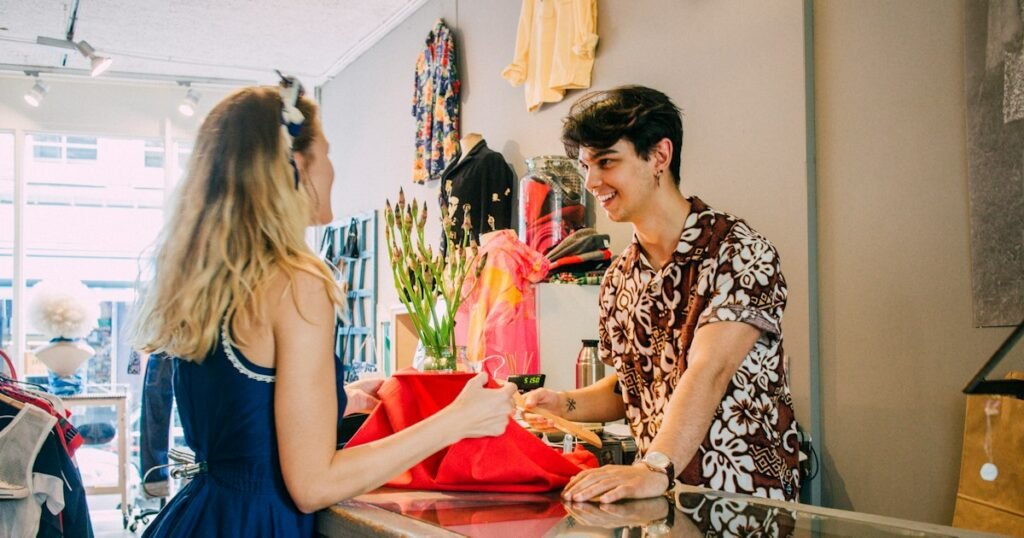
It’s easy to overlook checkout when you’re planning retail merchandising, yet it’s the one area every customer interacts with at the point of purchase. A good checkout display can attract new customers from outside and encourage impulse buys.
Design your checkout display to promote your brand and suggest add‑on products, even when no staff member is nearby. Does it represent your brand? Does it suggest small, affordable upsells that benefit shoppers? Treat checkout like a prime display area, and you’ll likely see higher average order value and revenue.
Planograms are detailed drawings of your store layout with special attention to product placement, and they are an important visual merchandising tool.
Outdoor signage is any sign you place outside your business, and it is the first point of contact between you and passersby. Billboards, banners, A-frame signs, and digital screens are common types of outdoor signage.
Ensure your signs use clear, concise messaging with easy-to-read fonts and high-contrast colors. Position signage in high-traffic areas for better visibility. And, of course, keep them updated with the latest promotions or information.
A seasonal display is a temporary arrangement of products or decorations that reflects a particular holiday or season. Themed displays can trigger impulse buys by reminding customers of upcoming events or holidays.
Some examples of seasonal displays include:
For example, a stationary store may set up a Valentine’s Day window display to tell a romantic story through thematic presentation. Maybe the brand showcases a beautiful writing desk with a fountain pen, luxury paper, and an open box of chocolates. Seasonal displays can showcase new arrivals and encourage customers to buy holiday-related products.
Ecommerce visual merchandising
There are very few in-person-only stores anymore. Thanks to unified commerce, any retailer can sell online just as easily as in their brick-and-mortar location.
However, that means retailers must also understand how to display products in ecommerce environments. With mobile devices driving around $2.5 trillion worth of transactions in 2025, the digital scroll must be as intuitive as the physical stroll. Here are some pages to focus on:
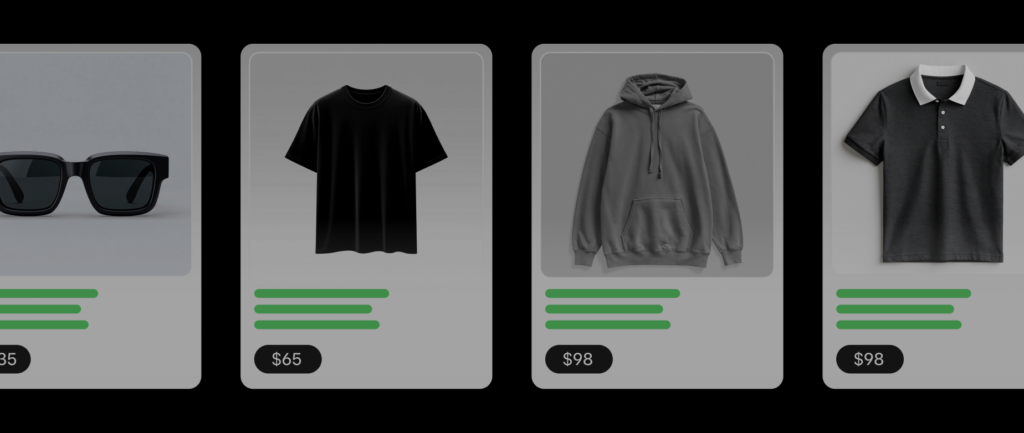
Homepages. Basically, your online store’s front window. Use clear visual hierarchies and seasonal stories to guide users toward bestsellers.
Collection pages. These are your digital aisles that showcase collections. Since many mobile sites underperform here, using tools like Shopify Search & Discovery to streamline search creates a competitive edge.
Product pages. Where shoppers get hands-on, figuratively speaking, with your products. Use high-res, lightweight images and video to show product textures that replace physical touch.
Ideally, you will also personalize your customers’ journeys across ecommerce touchpoints with intelligent product recommendations, dynamic content, loyalty incentives, and more. With 67% of brands prioritizing personalization, shoppers now expect digital retailers to remember them. Whether online or in-person, relevance is the way forward for modern retail.
Whether you’re designing for a brick-and-mortar location or an online store, the following visual merchandising tips will help you improve your presentation and sell more.
It’s easy to assume that visual merchandising stimulates one sense, and one sense only. After all, “visual” is right there in the name.
But the secret to an engaging, immersive shopping experience is to create a multi-sensory encounter—in other words, to employ “sensory branding.” Here are some tactics for incorporating all five senses into your displays:
Sight. Use colors for their psychological triggers. Leverage lighting, symmetry, balance, contrast, and focus to direct and control where customers look, and for how long. And experiment with techniques like color blocking, where you group products of the same color to create a bold, organized visual impact.
Sound. The music you play in your retail store can subtly and profoundly affect customer behavior. Slow music, for instance, can encourage slow shopping, relaxing customers so they spend more time browsing—and buying. Depending on who you’re targeting, you can slow people down by playing more mellow music, causing them to browse.
Touch. This one’s probably the easiest to get right. Just remember to give customers opportunities to touch, feel, and try the products you sell.
Smell. Scent marketing is a well-studied practice, with global brands like Samsung, Abercrombie and Fitch, and Nike using it to their advantage. Smell taps directly into the parts of the brain that control emotion and memory—two key drivers behind why people choose one brand over another.
Taste. Stimulating this sense can be magical if you’re in the business of selling consumables. Letting customers sample products before they buy is the equivalent of letting people try on clothes—it’s a highly effective best practice.
Color is one of the most important elements of visual merchandising. It catches attention, sets the mood, and can subtly influence buying decisions. In today’s retail environment, biophilic designs—designs that evoke nature— signal sustainability, while bold, high-contrast displays pop in social media photos.
Choose a palette that reflects your brand identity and target market. You might pair high-contrast shades, like black and white, to create visual interest. Or, try a monochromatic palette—related tones such as pink, red, and maroon—to build a cohesive story across your retail space.
When deciding on a color palette, ask yourself:
What’s the image and feeling I want to create? For example, for a boho-chic boutique, consider earthy tones that demonstrate your brand’s passion for nature and freedom.
Who’s my target market? Different customer groups have different color preferences. Use colors that attract them and avoid colors that don’t.
What colors are my competition using? Review their palettes, then choose colors or combinations that help your store stand out.
White space refers to areas of your store layout that don’t include design elements. It doesn’t mean you have to paint those spots white—it just means leaving them empty.
White space benefits retailers by giving customers room to breathe. It highlights displays and products while reducing clutter. It also helps create clear focal points in your store.
Customers typically want to know how an item will look and feel before they purchase it. To accommodate them, set up your product displays so shoppers can envision your products in their homes or on their bodies.
Consider a typical furniture store sales floor, set with product displays that help customers visualize the products in their homes. Or think of an apparel store that requires its sales staff to wear the clothes they sell, or populates it with mannequins and body forms styled in its latest outfits.
These tactics give prospective customers immediate reference points. And when customers can envision using your products, they’re more likely to purchase them.
Lighting is a powerful component of visual merchandising, shaping the vibe in your retail space and influencing how customers feel as they move through your store layout. Whether they feel like they’re in a nightclub, on a fashion runway, or right at home will largely depend on the lighting.
Retailers are increasingly adopting programmable lighting systems to control store environments better. These systems shift from bright, cool tones that energize morning shoppers to warm, amber tones for a relaxed, intimate atmosphere in the evening.
Using spotlights and accent lighting to highlight key product displays and focal points so customers immediately see your most important items.
Thoughtful lighting makes your store more visually appealing and supports a better customer experience that can boost sales.
Merchandisers often refer to the rule of three when creating product displays, a guideline that suggests you place products in sets of three. In a produce shop, this could mean setting a green Granny Smith, red Gala, and yellow Golden Delicious apple next to each other in a window display. In a paint store, it might mean showcasing a small, medium, and large can side by side.
The rule of three works because human eye movement typically stops when the eye catches an asymmetry. When you stack three-item groupings in vertical columns, you can guide a shopper’s gaze effectively from the top of a fixture down to the bottom.
A related idea is the pyramid principle, where you have one item at the top and all other items “one step below.” This principle also forces the eye to look at the focal point and then work its way down.
Grouping products with similar items will give your customers reasons to buy more from you. But grouping items has a more utilitarian justification: it saves shoppers time.
Instead of wandering your store trying to mix and match items or compare prices, they can find what they need quickly.
Cross-merchandising—displaying items from different departments that solve a single customer problem—is the most effective way to achieve this. It’s one of the reasons grocery stores put dips beside chips, or peanut butter with jam.
You can also think of it as creating categories. But you don’t need to limit your creativity there: you can also create “groupings” within categories. That means having merchandise that might be the same color, price, size, or type together.
Visual merchandising is more than building a single eye-catching arrangement—it’s about creating a cohesive experience, ensuring your store layout and displays work together to attract customers and drive sales.
When you design your retail space, consider how each section connects, how customers move through your store environment, and where they first see your hero product displays.
Place new collections or key items near the entrance to draw customers in, cluster related products nearby to encourage add-on purchases, and guide shoppers naturally toward other parts of the retail store.
Promotions are powerful tools for increasing sales. However, simply having offers available isn’t enough. You have to draw attention to them through visual elements.
Make your special promotions stand out with eye-catching visuals such as BOGO (buy one, get one) stickers, banners, and signs. Make offers clearly visible and easy to understand, so customers immediately understand their value. Place promos in high-traffic areas near relevant products.
Sustainability is a core brand value every retailer should adopt in 2026. With 78% of consumers saying sustainability considerations are important, credible, verified sustainability builds trust.
Some approaches to use in your store include:
Showcase certifications. Use Shopify Metafields to store specific certifications in your online store, for instance, GOTS (Global Organic Textile Standard) and FSC (Forest Stewardship Council). Display them as product highlights to verify your green commitments.
Offer sustainable fulfillment options. Shoppers are increasingly willing to trade speed for the planet and delay item delivery by one or two days if it helps reduce the carbon footprint. Integrate Shopify Planet to offer carbon-neutral shipping or a green delivery option at checkout to meet this demographic’s needs.
Highlight your circular economy. Promote items that are eligible for take-back or repair programs.
Promote sustainable materials. Use macro photography to showcase the unique grains of recycled plastics or the weave of organic fibers. Explain the materials as hero ingredients and how they benefit the planet.
Although more than 60% of shoppers are willing to pay a premium for sustainability, only 20% actually believe brands’ environmental claims. In this environment, radical transparency backed by verified data can be a unique selling point.
Should you hire a visual merchandiser?
Hiring a professional can be a valuable investment. A visual merchandiser can help you improve store aesthetics, better utilize your space, and increase sales. Merchandisers offer expertise in:
Consumer behavior and the mechanics of the customer journey
Spatial planning to maximize the profitability of every square foot
Translating seasonal trends into a cohesive brand experience
Strategic inventory placement to highlight high-margin products
However, they come at a price. ZipRecruiter cites an average hourly rate of $21.59 for a visual merchandiser, but that fee can easily reach $100 or more.
Use the following criteria to decide if a visual merchandiser is for you:
Are sales stagnating? A visual merchandiser might help rejuvenate interest and boost sales.
Does the store look outdated or cluttered? You may need a fresh, professional look to attract modern customers.
Is the store layout maximizing space? If you have underutilized areas, it may be worth hiring help to fill them.
Is your store positioned as a premium or trendy brand? High-end or fashion-forward retailers can especially benefit from professional merchandising.
Do you or your current staff have the skills and creativity needed for effective visual merchandising? It’s OK if you don’t have all the skills all the time—visual merchandisers exist to help fill creativity gaps!
Do you have the budget to hire a visual merchandiser? Displays are important, but it’s also essential that you don’t compromise on other critical areas of your business.
Is your store size and product range too extensive to manage in-house? It might be time to hire a staff or freelance visual merchandiser.
Evaluate the above criteria to decide if hiring a visual merchandiser is necessary. Balance the benefits with the costs to ensure alignment with the store’s overall strategy.
Getting started with visual merchandising
Knowing your target customer inside and out will help tremendously in creating effective visual merchandising and product displays. Dig for insights beyond the usual demographic data, such as age, income, and education level, exploring your customers’ psychographics and behaviors.
In other words, examine your target customer’s lifestyle. The easiest way to begin this research is by combing through customer data in your point-of-sale system (those order histories can reveal so much!).
Thanks to the internet, you no longer have to wait for a brilliant visual merchandising technique or idea to hit you.
Instead, there are several invaluable re
Treat your retail space like a test lab: form hypotheses, try new ideas, measure results, and keep the tactics that help you optimize your square footage for more sales.
Plan for a consistent refresh cadence to keep the store from going stale. Do quick maintenance daily, like facing, refolding, and refilling. Refresh featured tables and endcaps every four to six weeks, and update front window displays every two to three weeks, or faster during peak promos.
Put these visual merchandising strategies into action and monitor how intentional product displays enhance customer experience and drive revenue.
Start selling in-person with Shopify POS
Shopify POS is the easiest way to start selling in-person. Take your brand on the road and accept payments, manage inventory and payouts, and sell everywhere your customers are—farmers markets, pop-up events and meetups, craft fairs, and anywhere in between.