
Menstrual cups vs. pads and tampons: How do they compare?

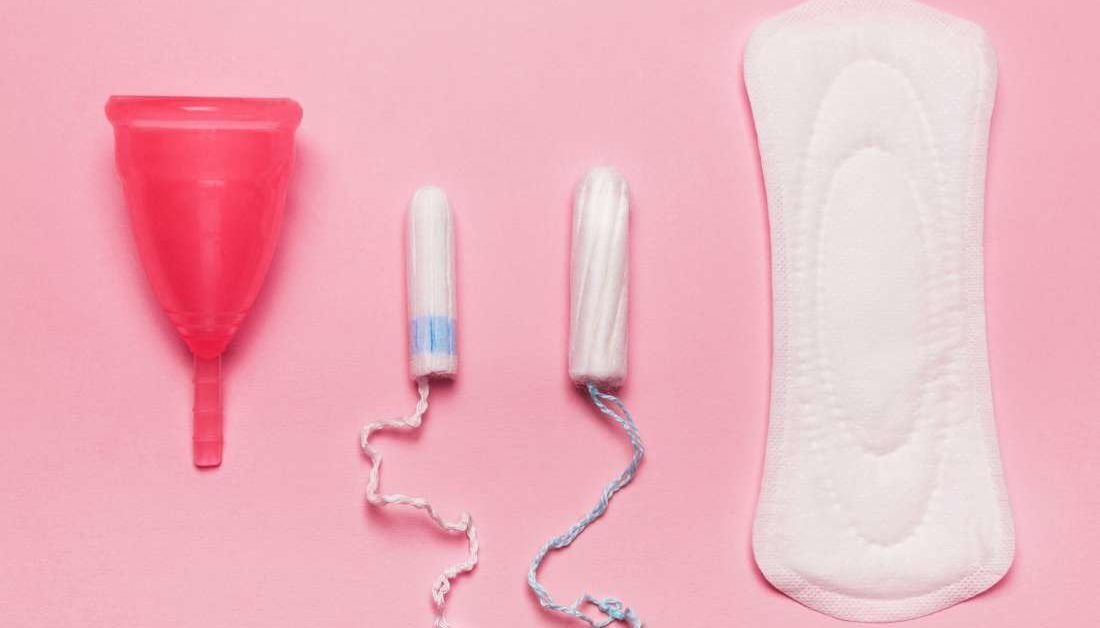
Menstrual cups are gaining popularity, particularly in Western nations, largely because they can be reused. Yet questions remain about their safety compared with disposable products and about global awareness. A recent review seeks to address these issues.
The review concludes that menstrual cups are safe, but information and education about them are insufficient.
Menstrual cups date back to at least 1932, when L. J. Goodard patented a “vaginal receptacle.” Similar to modern designs, it was a bell‑shaped device inserted into the vaginal canal to collect menstrual flow.
Today, manufacturers produce them from soft, pliable, sterilized, and easy‑to‑clean medical‑grade materials like silicone, rubber, latex, and elastomer.
Their reusability has driven growing popularity; they are also durable, often lasting around ten years.
Many view menstrual cups as environmentally friendly, opting for them to cut waste from the plastic, non‑recyclable, and non‑biodegradable materials found in disposable pads and tampons.
However, it remains unclear whether they are as safe, less safe, or safer than conventional disposable pads and tampons.
A team from the Liverpool School of Tropical Medicine, together with collaborators from the UK, Kenya and India, conducted a review of medical studies and grey literature, examining conference abstracts, reports and doctoral theses to gather information on menstrual cup usage and safety.
They also assessed how frequently educational websites and programs mention menstrual cups alongside other hygiene products. Their findings are published in the journal .
Leakage rates similar between products
Prof. Penelope Phillips‑Howard, the review’s senior author, observes, “Despite the fact that 1.9 billion women globally are of menstruating age — spending on average 65 days a year dealing with menstrual blood flow, few good quality studies exist that compare sanitary products.”
She adds, “We aimed to address this by summarising current knowledge about leakage, safety, and acceptability of menstrual cups, comparing them to other products where possible.”
The review examined 43 studies involving a total of 3,319 participants. Fifteen studies involved cohorts from low‑ and middle‑income nations, while 28 focused on participants from high‑income countries.
Four of the studies, comprising 293 participants, directly compared menstrual cups with tampons and disposable pads to assess leakage rates.
Three studies reported similar leakage rates between cups and other products, whereas one study indicated that cups leaked significantly less.
Leakage was attributed to factors such as unusually heavy flow, atypical uterine anatomy, using an undersized cup, incorrect placement, or delayed emptying.
Thirteen studies reported that about 70 % of cup users were willing to keep using the product after becoming comfortable with proper technique.
Familiarization proved the most challenging aspect for many first‑time users. Six qualitative studies showed that participants often required several cycles to gain confidence.
The review also indicates that information on menstrual cups and their use is frequently insufficient, leaving many unaware of their availability.
Three high‑income country studies found that only 11 %–33 % of menstrual product users were aware of menstrual cups. Additionally, among 69 educational websites across 27 nations covering puberty and menstruation, merely 30 % referenced menstrual cups.
Menstrual cups are safe to use
The researchers also examined the safety of menstrual cups, analyzing adverse effects reported in North American and African populations.
Only five participants across the studies reported toxic shock syndrome linked to cup use. The authors note that the total number of cup users is unknown, preventing a direct risk comparison with disposable products.
Four studies found that cup use did not alter vaginal flora. Examinations of the vaginal canal and cervix after cup use revealed no tissue damage.
However, there may be risks for IUD users; the review identified 13 instances where cup removal displaced the IUD.
Among cup users, five reported pain, three experienced vaginal wounds, six developed allergies, and nine reported urinary tract issues.
However, the researchers conclude that based on the available studies, menstrual cups are at least as safe and reliable as other menstrual hygiene products, and they urge educators to include them in their presentations:
“This systematic review suggests that menstrual cups can be an acceptable and safe option for menstrual hygiene in high-income, low-income, and middle-income countries but are not well known. Our findings can inform policymakers and programs that menstrual cups are an alternative to disposable sanitary products, even where water and sanitation facilities are poor. “
The authors caution that many of the examined studies lacked sufficient quality.
Several studies were not published in peer‑reviewed journals, some were outdated with inaccurate data, and others examined cups no longer on the market.
The authors note, “the outcomes identified in the reports and studies reviewed varied by different timepoints and designs,” indicating inconsistent and hard‑to‑compare results.
They also observe, “[r]ecruitment in observational studies was not representative or clear,” and point out that reliance on self‑reporting may cause overestimation and inaccuracies.
For these reasons, the investigators call for more in‑depth research on cup safety, risks, environmental impact, and cost‑effectiveness.