Artificial intelligence is everywhere, and now Amazon’s AI shopping guides have arrived to assist you in selecting the best possible products. But do these tools truly have your best interests at heart, or are they skewed toward promoting specific brands?
Much like the user-generated shopping guides frequently displayed on Amazon, these AI-driven guides aggregate data from millions of products. Their goal is to help you understand product categories, price ranges, and essential features, while also recommending top-tier options.
The objective is to move beyond simply presenting a list of items; instead, the guides help you grasp industry jargon and understand what specific features mean for your personal needs. This allows you to make a more informed purchasing decision.
Amazon’s AI shopping guides are powered by Amazon Bedrock, which utilizes advanced AI models to provide accurate information. As with any AI-generated content, there is a risk of inaccuracies, as these models can occasionally hallucinate or pull data from unreliable
One aspect I appreciate about these guides is that the information is notral inputs:
Amazon’s marketplace, including third-party sellers.
Community Q&As.
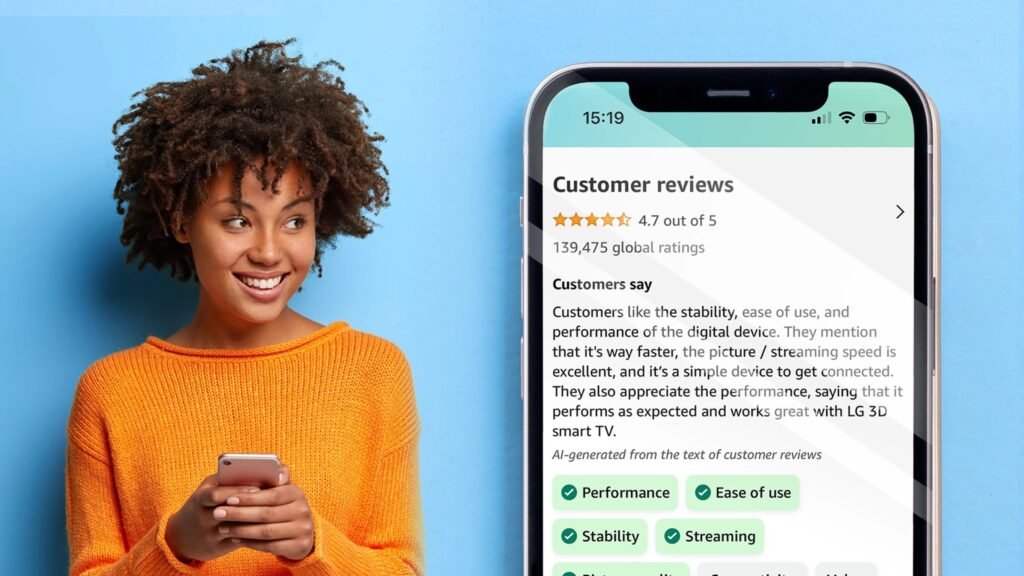
Customer reviews.
Terminology gathered from non-Amazon websites.
Common shopping requirements, such as selecting a computer for gaming, video editing, general browsing, or student use.
All of this data is compiled into a guide that walks you through the research process before suggesting products categorized by specific use cases or shopping needs.
This is the more challenging aspect, and it is an area where Amazon will need to improve to make these guides truly valuable. In theory, you enter a search term on the mobile app or mobile site, and Amazon displays an AI shopping guide within the suggested search queries before you finalize your search.
You may also see a guide appear just below the first few suggested products after a search is performed. In my experience, the AI guides appeared more frequently this way than through the search box. Additionally, I found that more guides were visible on the mobile website compared to the mobile app.
For example, consider two screenshots: both are searches for “televisions,” yet the mobile site displays the guide while the Android app does not. My login status did not seem to affect the results. Conversely, when I searched for “laptops,” the guide appeared on both the site and the app.
Currently, AI-generated shopping guides remain limited on Amazon, though the company is actively working to expand them.
To view guides for popular categories, visit the Shopping Guides page. It currently features 24 guides that are likely to rotate based on seasons and holidays. This is also an effective way to access the guides on a desktop computer. If you prefer viewing them on a larger screen, simply note the URL from your phone to open it in your desktop browser.
The benefit of these guides is that because they are not user-generated, they may avoid some of the typical biases. However, that does not mean these guides are flawless or entirely infallible.
Overall, I was impressed by the level of detail provided. For instance, the Smartwatches Buying Guide began with seven suggestions across various categories, such as top overall pick, best deal, longest-lasting, and sleep analysis. It then transitioned to my favorite section, which explains the factors to consider alongside a series of recommendations tailored to those specific needs.
You are then able to view popular brands, along with customer reviews for each. The guide continues with sections on shopping by type and price, followed by a list of common Q&As and a more extensive list of product recommendations.
When compared to shopping guides on popular tech and consumer websites, many of the recommendations are quite similar. The drawback is that you do not always receive the same depth of individual product reviews.
For now, the guides are restricted to broader categories. For example, there is a guide for “televisions” but not “smart TVs,” and a guide for “laptops” but not “gaming laptops.”
I recommend using these as a starting point rather than a guarantee of the best products. Always conduct a bit of extra research and compare these suggestions with other guides. Personally, I trust them slightly more than the influencer-led guides on Amazon, primarily because they appear less biased.
While the guides themselves are quite detailed, you will achieve even better results by pairing them with Rufus, Amazon’s AI shopping assistant. You may have already encountered Rufus when searching for answers or reviews while viewing a specific product.
Even when an Amazon AI shopping guide does not appear, you will usually see suggested Ask Rufus questions while typing in the search box. For instance, while there is no shopping guide for “smart TVs,” Ask Rufus lists three questions regarding finding clearance TVs in various sizes.
Additionally, if you are viewing a product, scroll down to the Ask Rufus box located just above the Customer Reviews section. This helps you learn more specific details. There are even suggested questions provided just below the search box.
You can also access Rufus without looking at a specific product by clicking the Ask Rufus icon at the bottom right of the Amazon Shopping app. From there, you can ask any shopping-related question. You will see suggested questions based on your recent browsing history, but you are not restricted to those.
Use a combination of Amazon AI Shopping Guides, Rufus, and a bit of outside research to make the most informed decision, especially for major purchases. You might also consider using other AI tools, such as the shopping feature in ChatGPT search.
While you are shopping, try using money-saving browser extensions, along with these tricks to save money on Amazon.


















One thought on “Do Amazon AI Shopping Guides Really Make Shopping Easier?”