From viral social media hacks to products marketed on television, we put the most popular methods for preserving greens to the test to see what actually works.
Nobody enjoys wasting food, but leafy greens often spoil so quickly that it feels entirely out of your control. One day you are bringing a fresh batch home from the store, and the next you are staring at a wilted mess destined for the trash.
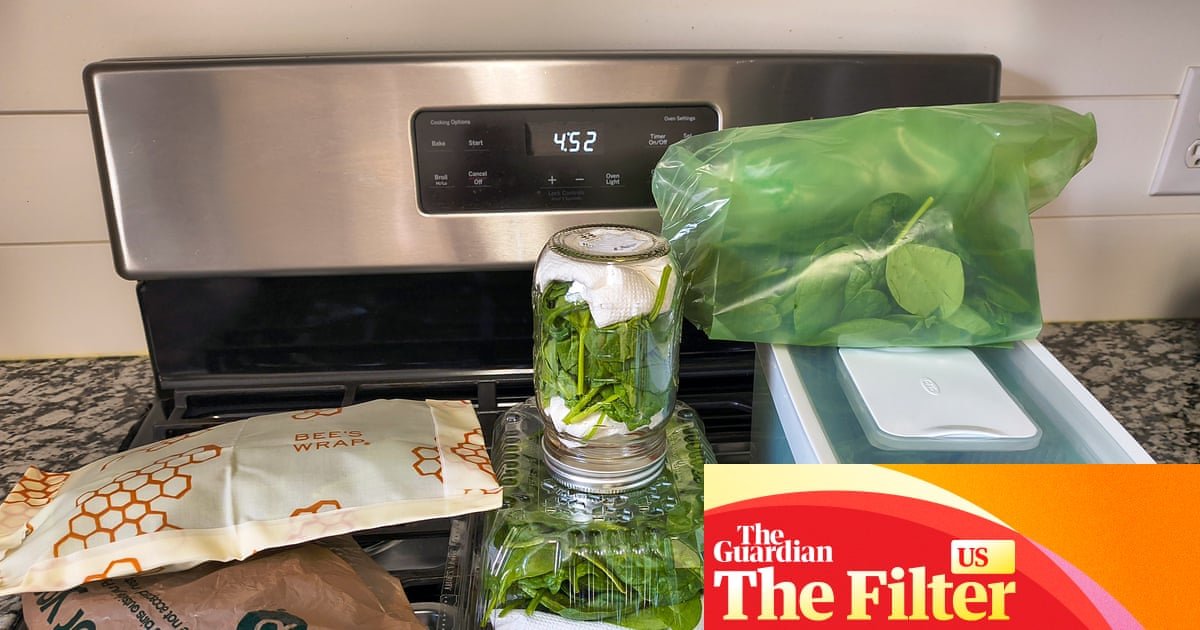
The internet is saturated with tips and gadgets that claim to solve this problem, but which ones truly deliver? To find out, I tested three products and three online methods intended to keep baby spinach fresh for as long as possible.
After dividing a batch of baby spinach into various storage containers and placing them in my refrigerator, I checked on them every few days for two weeks to evaluate their condition: were the leaves still crisp? Was there condensation? Were the leaves turning slimy? All the spinach remained unwashed, with the exception of one method that specifically required it. I considered a method failed once the spinach became too unappealing to eat, which is admittedly a subjective standard for this non-scientific test.
Here is how they performed, ranked from worst to best.
The kitchen towel method involves wrapping a batch of spinach in a dry cloth towel, then placing it in a plastic grocery bag.
How long did the spinach last? About four days.
Following the advice of a Reddit thread, I washed half a container of spinach and wrapped it in a kitchen towel, then placed it into a plastic grocery bag. I left it in the fridge until day six, by which time most of the leaves were soft and had developed an odor. I am marking this method as failed on day four.
Washing the spinach likely accelerated the decay by introducing excess moisture, but I wanted to follow the procedure exactly as described.
Debbie Meyer GreenBags are reusable produce storage bags meant to extend the life of your groceries. Online discussions suggest they are designed to absorb ethylene gas, which is released by produce and accelerates ripening. However, the vague marketing refers only to “a unique, proprietary combination of natural ingredients.” They are also intended to prevent moisture buildup and are expected to be reusable eight to 10 times.
I loaded half a container of spinach into a large GreenBag and folded the top over to close it as instructed. Despite patting the unwashed spinach dry to minimize initial moisture, the bags filled with condensation, and even during the days the spinach remained edible, it stayed wet. While the spinach was fine on day three, by day six I noticed a slight musty smell and several slimy, dark leaves, so I am marking this as failed on day four.
I later discovered that the GreenBags instructions suggest wiping condensation out of the bag with a paper towel when it appears. While this might have extended the shelf life, it requires much more maintenance than any other solution on this list, so the results as tested reflect an apples-to-apples level of effort.
The OXO GoodGrips GreenSaver Produce Keeper is a storage container with three distinct features. A removable basket is designed to encourage airflow and prevent moisture buildup. A carbon filter, which requires replacement every 90 days or so, is intended to absorb ethylene gas. Additionally, an adjustable vent can be left open or closed to customize humidity levels.
If this sounds expensive, that is because it is: the five-quart version retails for $26, and a four-pack of filters costs $13.
I set the vent lid to the “closed” position, which OXO suggests for leafy greens, and I also dried the spinach with paper towels, as it seemed wetter than usual.
The spinach inside remained edible through day nine, but I had to mark it as failed on day 12, as the leaves were significantly softer, emitted an unpleasant odor, and exhibited more bruising and slime. I am calling day 10 the final day of freshness.
This method, which I found in a TikTok video, involves storing spinach in a mason jar along with two layers of paper towels—one below the spinach and one above—before sealing it and storing it upside down.
How long did the spinach last? About 13 days.
While the mason jar method made it past the day 12 checkpoint, it was the most pungent of any contender that reached day 14. It emitted a foul, sour smell I had never encountered before. I think it is safe to say the greens stayed relatively fresh for about 13 days.
Beeswax wraps are a reusable alternative to plastic cling wrap, made from beeswax-coated cloth. While they cost more than their plastic counterparts, they can be washed and reused, and they are expected to last up to a year.
The $13 Bee’s Wrap brand I purchased included one large and one medium sheet. For this test, I folded and sealed the large wrap into a pouch, stuffed the spinach inside, folded it closed, and secured it using the pressure and warmth of my hands.
Although the Bee’s Wrap made it to the day 14 check-in, I am declaring the spinach’s time of death as day 13, the day after I last observed it having a fresh and clean smell. By day 14, the spinach had very soft leaves, very little crispness remaining, and a slight musty odor that could not be ignored.
On the positive side, the storage pouch created from the Bee’s Wrap sheet held its shape for the full 14 days and the seams stayed sealed quite well, without being difficult to open when needed. I could see them being useful for cheese, sandwiches, and leftovers.
It is a simple concept: place a paper towel on top of your spinach inside the clamshell container it comes in, close it, then flip it upside down. I followed this YouTube video from Jerry James Stone, but the same tip appeared in plenty of other places.
The outcome was surprising. Although the container often had condensation inside and some wet spinach leaves, for the most part, the majority of the spinach remained fresh the entire time. Even after 14 days, it had little to no smell and retained at least some of its crispness. Like all the other methods tested, some slimy and decaying leaves did appear, but this method produced the least amount of decay. For a technique that requires both the least effort and the least investment, it is hard to ask for a better outcome.





















3 thoughts on “Six tips and products to keep leafy greens fresh longer, tested”